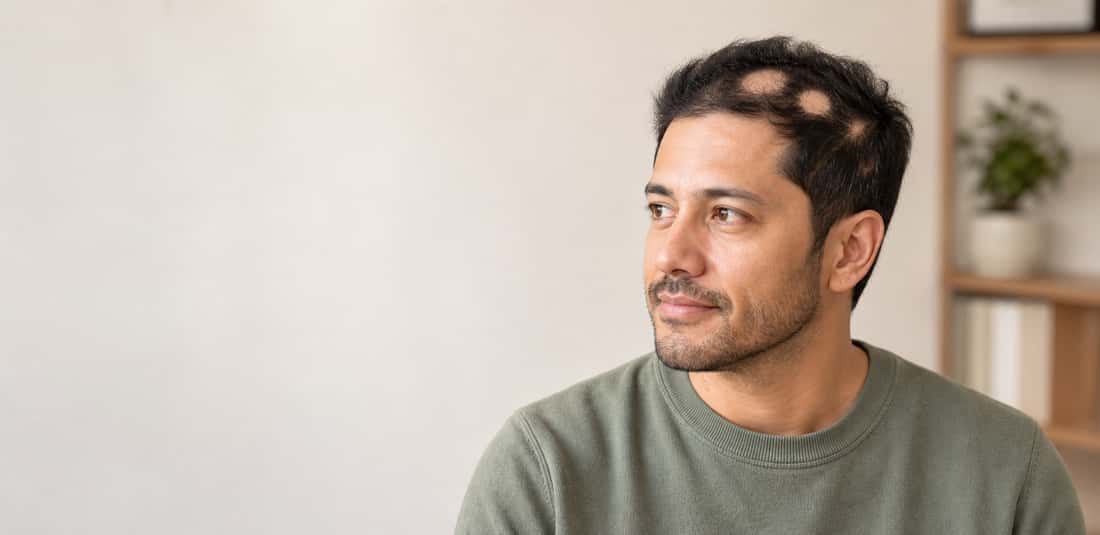
Patchy alopecia areata
Smooth, round or oval patches may appear suddenly on the scalp, beard, eyebrows, or other hair-bearing areas.
Alopecia education, made human
Learn about alopecia in plain language: what it is, why it can happen, how dermatologists evaluate it, and what options may help.
The essentials
Alopecia is a broad term for hair loss. It can affect the scalp, face, eyebrows, eyelashes, beard area, or body hair. Some forms are temporary and reversible; others can be chronic or scarring.
Alopecia areata is one well-known type. It occurs when the immune system mistakenly targets hair follicles, often causing round or oval patches of hair loss. The hair follicles are usually not destroyed, which means regrowth is possible for many people.
Patterns to recognize
A dermatologist looks at where hair is thinning, how quickly it changed, whether the scalp is inflamed or scarred, and whether nails, skin, medical history, styling practices, or medications may be involved.
Smooth, round or oval patches may appear suddenly on the scalp, beard, eyebrows, or other hair-bearing areas.
A less common form where all or nearly all scalp hair is lost. Treatment plans are individualized by extent and age.
A rare pattern involving near-complete loss of scalp, face, and body hair. Support and protection become especially important.
Diagnosis and options
The goal is to identify the type of hair loss and decide whether watchful waiting, treatment, camouflage, or emotional support is the right next step.
Clinicians inspect the pattern of loss, follicle openings, skin changes, and nail findings.
Family history, autoimmune conditions, medications, illness, stress, and hair practices may be reviewed.
Blood tests or a small skin biopsy can help rule out other causes with similar patterns.
Options can include observation, corticosteroids, JAK inhibitors for severe adult alopecia areata, or other therapies.
Daily living
Hair loss can affect identity and wellbeing. A good care plan respects both scalp health and the emotional weight of visible change.
Use sunscreen on bare scalp or skin, and consider hats, scarves, wigs, or hairpieces for sun and temperature protection.
Gentle detangling, looser styles, and avoiding harsh heat or chemical treatments can reduce additional breakage.
Support groups, counseling, and trusted clinicians can help with stress, anxiety, and confidence during flares.
When to seek care
Also seek care if you notice scalp scaling, redness, swelling, pain, oozing, nail changes, eyebrow or eyelash loss, or more shedding than usual when washing or brushing.
Common questions
No. Alopecia areata is an autoimmune condition and does not spread from person to person.
Regrowth is possible, especially when follicles are not scarred, but the course is unpredictable. Some people have one episode; others have repeated flares.
Stress or illness may be associated with onset in some people who are already susceptible, but alopecia areata is not simply caused by stress or personal choices.
Treatment depends on the diagnosis and extent. Dermatologists may discuss observation, corticosteroid injections for patchy disease, topical or oral medicines, JAK inhibitors for severe adult alopecia areata, and cosmetic options.
Reviewed source base